
Engineering Intelligence Platform
Transforming Engineering Intelligence into Operational Reality
McC AI Group’s Engineering Intelligence Platform implements the principles of Engineering Intelligence through an integrated, modular architecture that combines verified information, engineering knowledge, transparent reasoning, governed intelligence, and engineering execution. Built on proprietary, patent-pending technologies, the platform enables organizations to deploy trusted engineering decisions across critical infrastructure while seamlessly integrating with existing operational systems.
Why an Engineering Intelligence Platform?
Engineering Intelligence defines how trusted engineering decisions should be generated. The Engineering Intelligence Platform provides the technologies that make those principles operational.
Rather than replacing existing SCADA, CMMS, EAM, GIS, historians, or enterprise systems, the platform connects them into a unified engineering decision environment that transforms operational data into trusted engineering actions.
Engineering Intelligence Platform Architecture
Engineering Intelligence defines the principles for generating trusted engineering decisions. The Engineering Intelligence Platform transforms those principles into an operational system by integrating Artificial Intelligence with the five pillars of Engineering Intelligence—verified information, engineering knowledge, transparent reasoning, governed intelligence, and engineering execution. Rather than replacing existing operational technologies, the platform builds upon them to deliver trusted engineering decisions through modular, scalable capabilities that can be deployed across critical infrastructure.
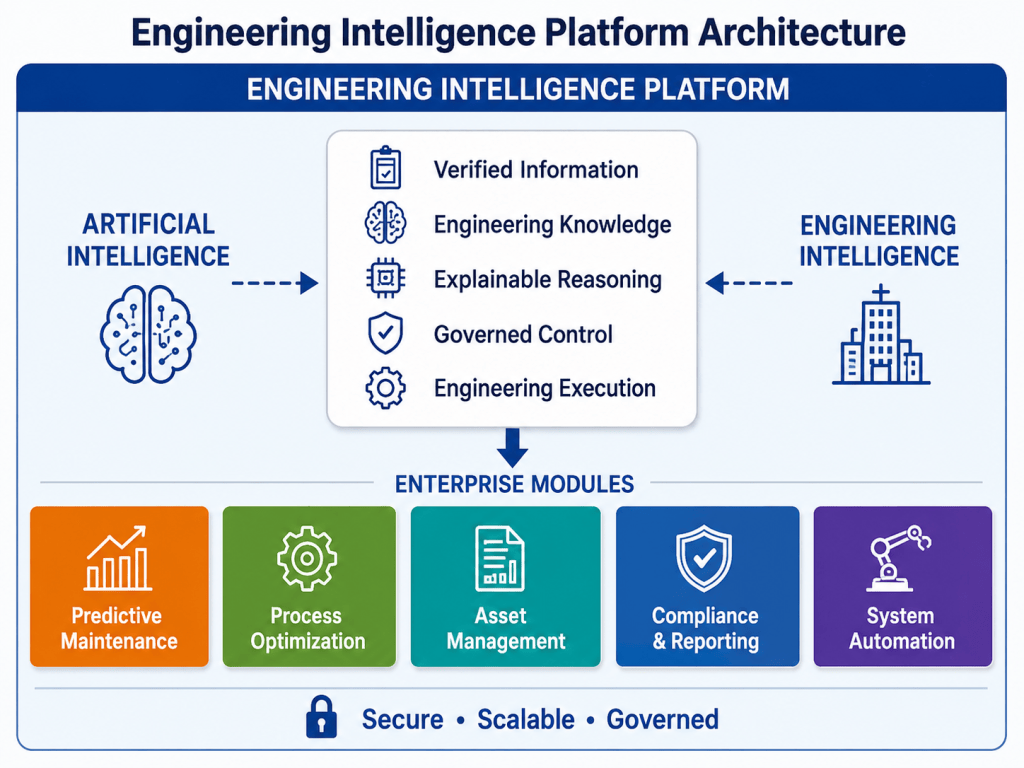
The Engineering Intelligence Platform serves as the foundation for McC AI Group’s modular technologies. Organizations can implement individual modules to address specific operational needs or combine multiple modules into an enterprise-wide Engineering Intelligence platform. This modular architecture enables organizations to protect existing investments while progressively expanding Engineering Intelligence capabilities across operations, maintenance, compliance, asset management, and facility management.
Platform Modules
The Engineering Intelligence Platform is implemented through a suite of integrated modules, each designed to address a specific aspect of trusted engineering decision-making. Together, these modules combine verified information, engineering knowledge, transparent reasoning, governed intelligence, and engineering execution. Organizations may deploy individual modules for targeted needs or integrate multiple modules into a broader Engineering Intelligence Platform.
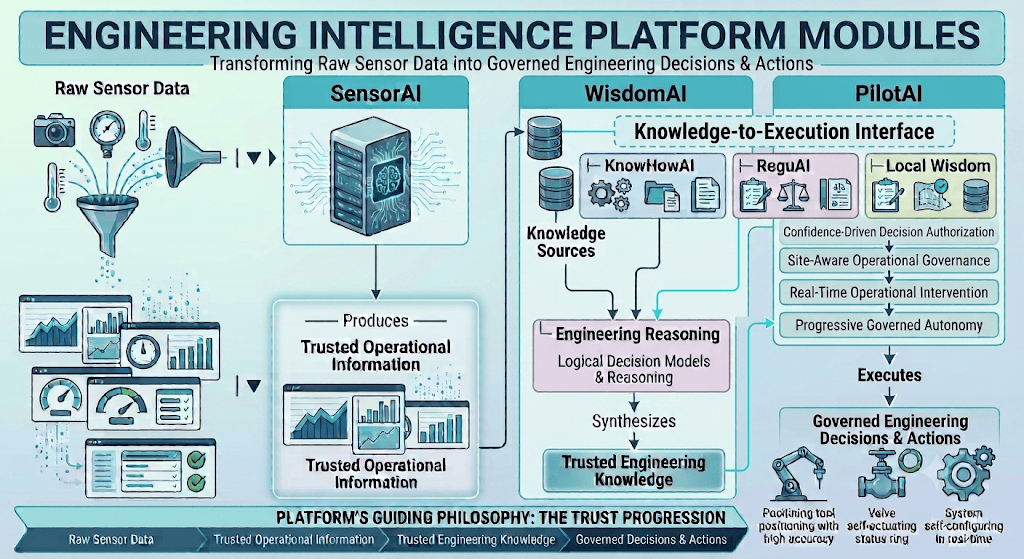
OperationsAI: Applying Domain Knowledge
- Purpose: Applies facility-specific engineering context to operational decision-making. By applying deep pattern recognition to complex operational conditions, it distinguishes technically sound actions from inappropriate ones.
- Integration: Combines trusted operational information with process models, engineering relationships, optimization algorithms, operating objectives, and site-specific constraints.
- Application: Provides the operational foundation for domain applications—including AerationAI and AerationAI-SND—by defining facility-specific models, strategies, information requirements, and control logic.
- Domain applications may include: AerationAI, AerationAI-SND, and future process-specific optimization technologies.
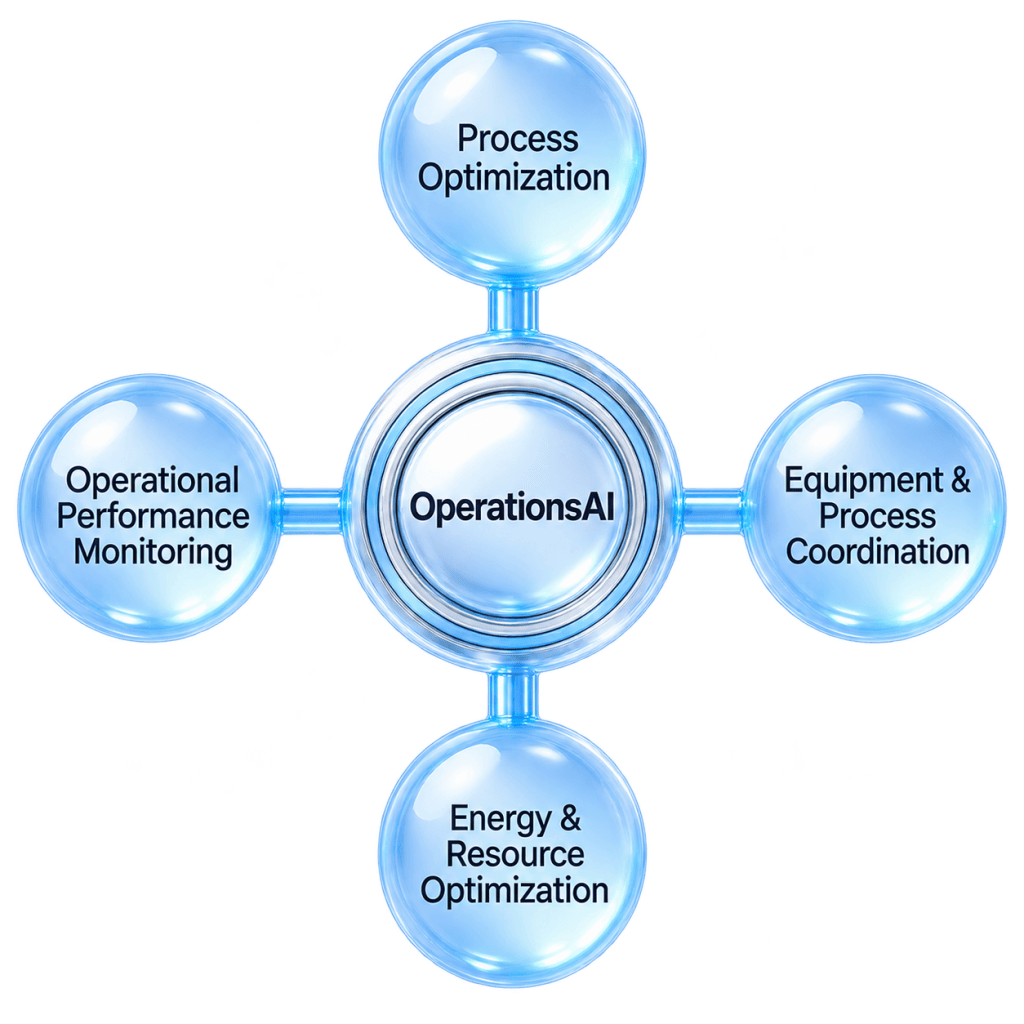
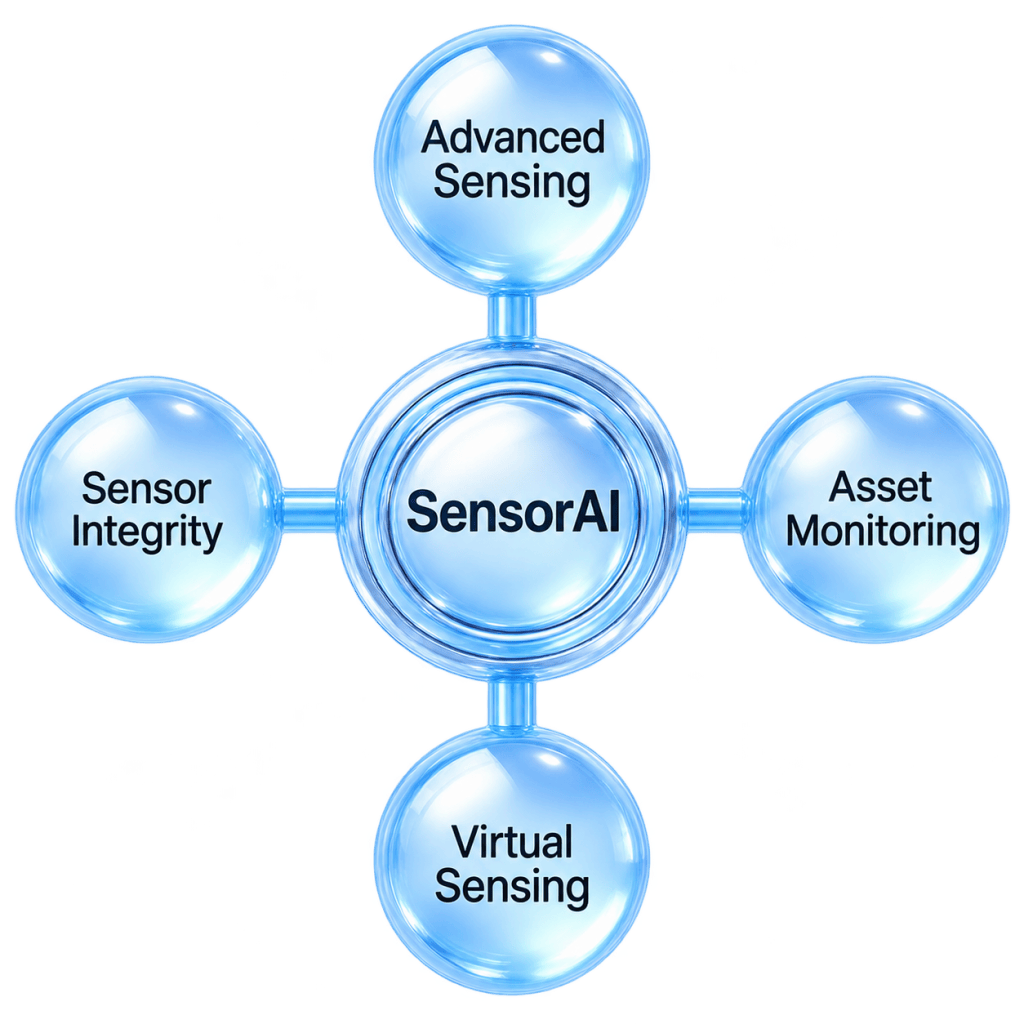
SensorAI: Establishing Verified Information
- Purpose: Transforms raw sensor data into trusted operational information.
- Validation: Continuously evaluates signal integrity through advanced sensing, virtual sensing, cross-validation, and data-quality assessment.
- Foundation: Detects unreliable measurements, reconstructs missing information where appropriate, and establishes the factual baseline required for trusted engineering decisions..
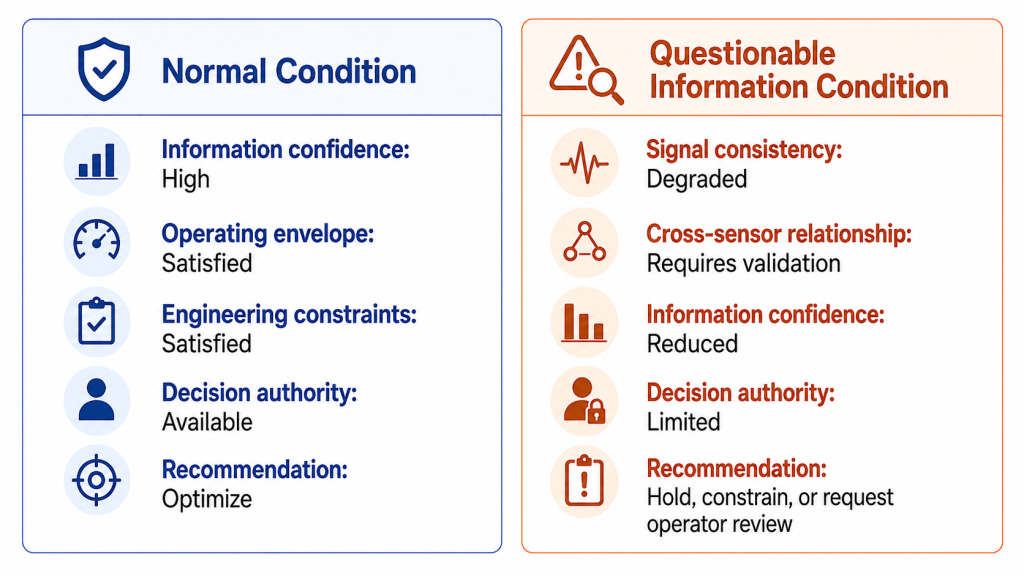
Demonstrating Information Reliability
Process measurements can remain numerically plausible even when drift, fouling, calibration loss, communications problems, or abnormal operating conditions reduce their suitability for operational decisions.
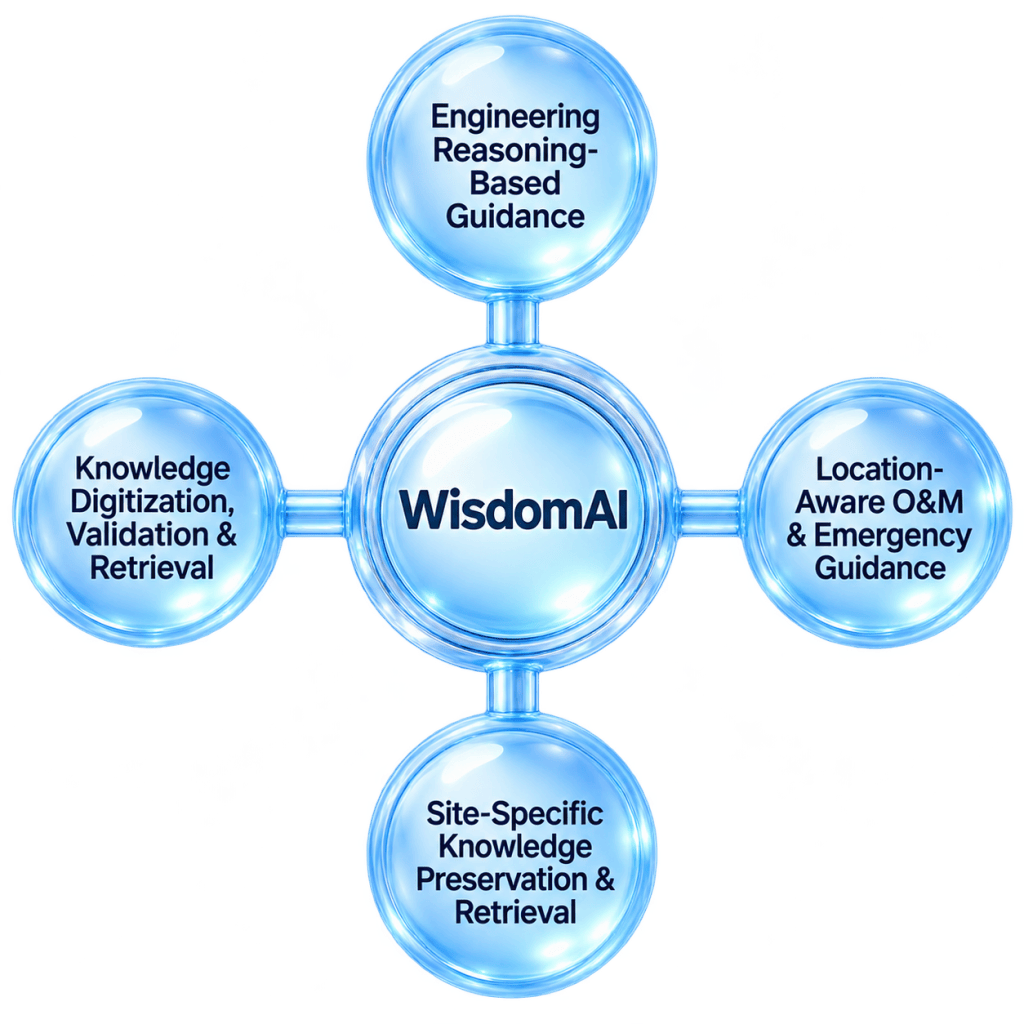
WisdomAI
- Purpose: Applies facility-specific engineering context to operational decision-making. It functions as the enterprise expert system, preserving critical institutional knowledge and maintaining an immutable, transparent trail of logic for every operational recommendation.
- Integration: Combines trusted operational information with process models, engineering relationships, optimization algorithms, operating objectives, and site-specific constraints.
- Application: Provides the operational foundation for domain applications—including AerationAI and AerationAI-SND—by defining facility-specific models, strategies, information requirements, and control logic.
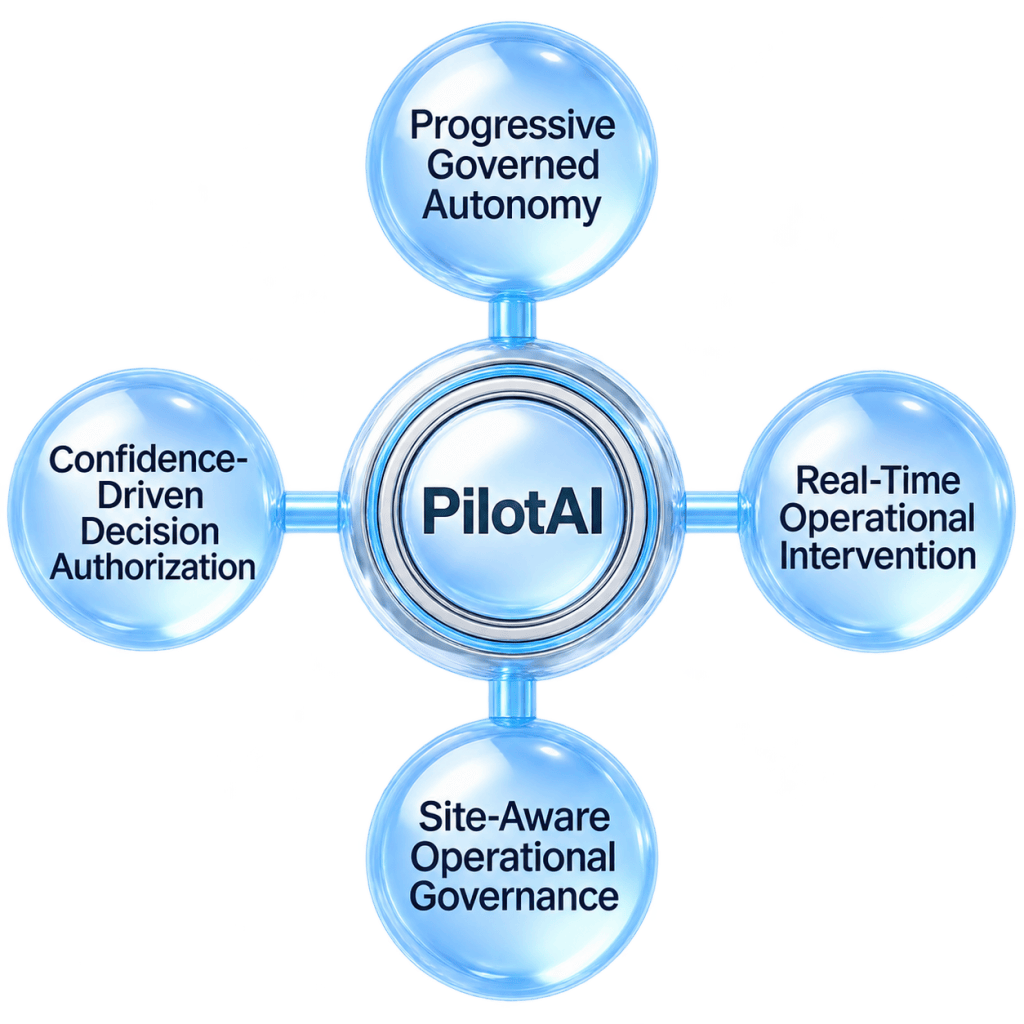
PilotAI: Enforcing Governance
- Purpose: Transforms trusted reasoning into governed decisions and actions.
- Constraint: Evaluates decision confidence, operating conditions, engineering constraints, and approved authority boundaries before action.
- Progression: Manages decision authorization from advisory and shadow operation through limited authority toward progressively governed autonomy while retaining operator oversight and fallback controls.
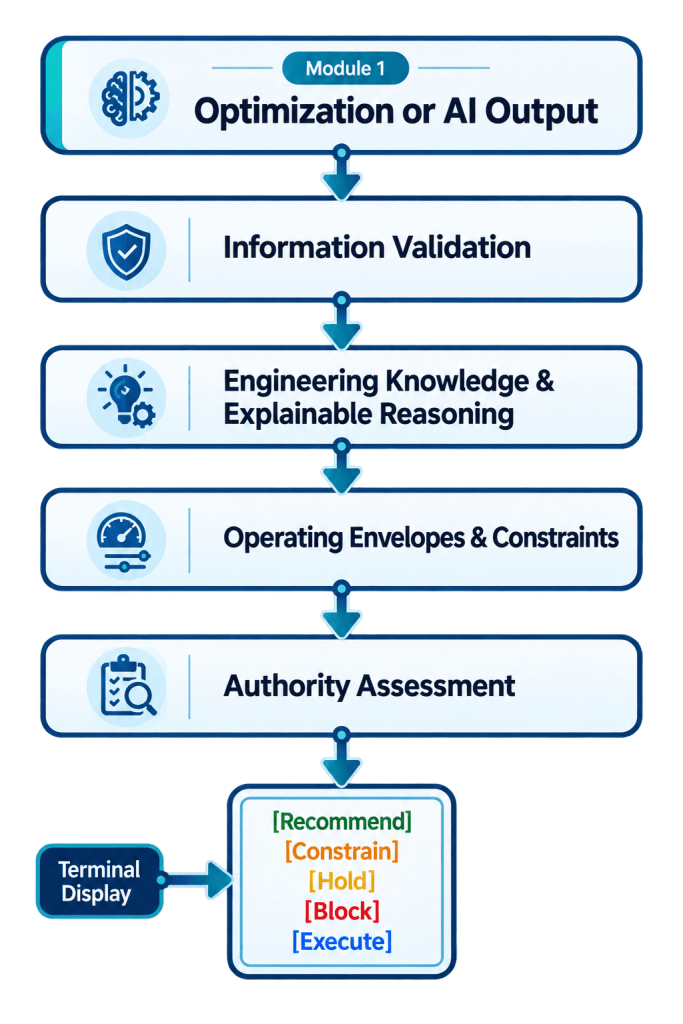
From Optimization to Governed Action
Engineering Intelligence separates optimization from operational authority. An AI or optimization output must undergo information validation, engineering reasoning, operational constraints, and authority assessment before it becomes a recommendation or action.
A proposed action moves through a governed decision pathway.
Why Modular?
Every organization has different operational priorities, existing systems, and levels of readiness.
Organizations can deploy individual modules as needed and progressively expand toward a complete Engineering Intelligence Platform deployment, while preserving suitable existing instrumentation, control systems, infrastructure, and prior technology investments.
This modular architecture allows implementation to progress according to operational need, technical readiness, organizational priorities, and appropriate levels of automation authority.
Platform Benefits
The Engineering Intelligence Platform enables organizations to:
- Generate trusted engineering decisions
- Improve safety, reliability, and operational resilience
- Reduce operating and maintenance costs
- Increase energy and resource efficiency
- Preserve and transfer institutional engineering knowledge
- Strengthen regulatory compliance and operational governance
- Improve facility-wide and enterprise visibility
- Progress safely toward governed autonomous operation
- Support resilient and sustainable critical infrastructure
Proprietary and Patent-Pending Technologies
The EI Platform is supported by a coherent portfolio of proprietary and patent-pending technologies addressing trusted information, engineering knowledge, explainable reasoning, governed intelligence, and controlled deployment.
Together, these technologies provide a foundation for deploying Engineering Intelligence within real-world critical infrastructure.
Engineering Intelligence in Practice
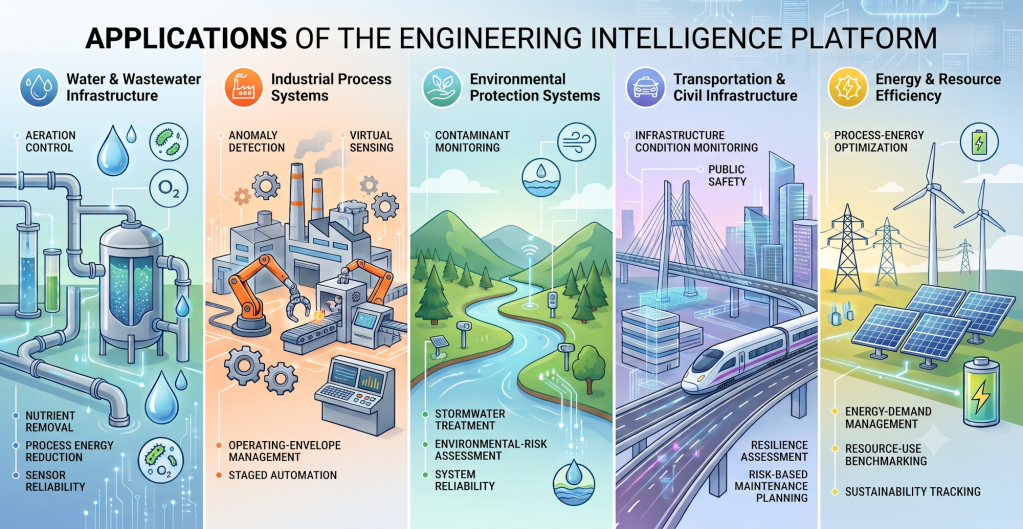
Organizations may begin with a specific operational need—such as sensor reliability, engineering knowledge preservation, decision governance, process optimization, or staged automation—and progressively integrate additional capabilities as operational requirements evolve.
Engineering Intelligence
Engineering Intelligence is the discipline of generating trusted decisions for critical infrastructure. It brings together engineering principles, operational information, human expertise, advanced algorithms, and governance within a unified framework. Its purpose is to make engineering decisions more trustworthy, explainable, accountable, and appropriate for the systems they affect.
The Founding Charter of Engineering Intelligence
The Founding Charter of Engineering Intelligence establishes the vision, principles, and purpose of Engineering Intelligence as a discipline dedicated to trusted decision-making for critical infrastructure.
 McC AI Group, Inc.