

Engineering Intelligence for Critical Infrastructure
Engineering-centered intelligence for wastewater treatment, regulated industrial facilities, and other critical infrastructure.
McC AI Group develops proprietary, patent-pending Engineering Intelligence technologies that combine trusted operational information, site-specific engineering knowledge, evidence-based reasoning, facility-specific operational intelligence, and governed decisions and actions.
Our objective is to improve the quality, timeliness, technical defensibility, and governance of consequential operational decisions.
Engineering Intelligence for Regulated Infrastructure and Industrial Facilities
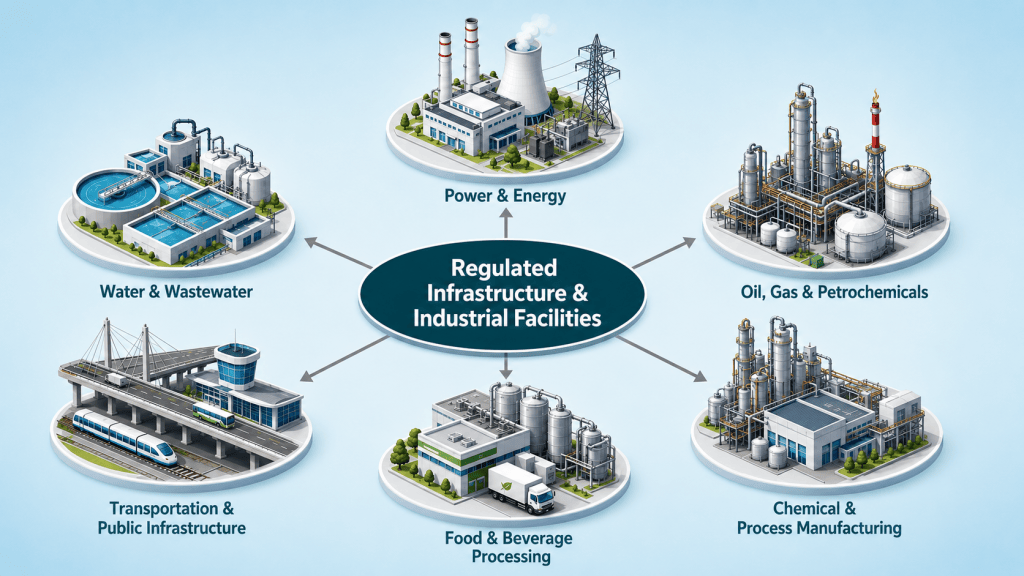
Engineering Intelligence is designed for facilities where operational decisions must balance performance, reliability, safety, regulatory requirements, energy, equipment constraints, and accountable authority.
What McC AI Group Does
McC AI Group is an engineering research and technology company pioneering Engineering Intelligence for critical infrastructure and regulated industrial facilities.
We develop proprietary technologies that transform operational data into trusted information, engineering knowledge, evidence-based reasoning, operational intelligence, and governed action—while working with existing plant infrastructure wherever practical.
Why Engineering Intelligence Matters
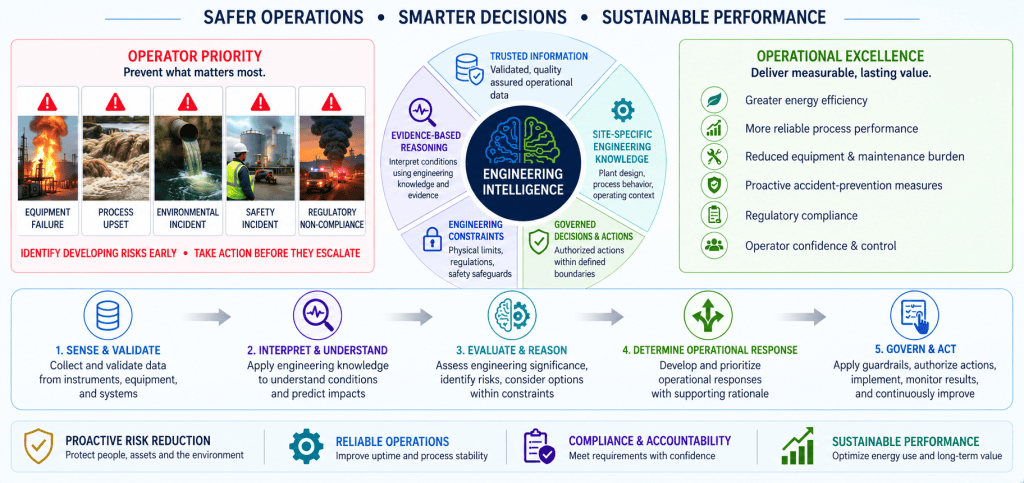
Critical infrastructure requires more than data, AI, prediction, or optimization.
Sensors, analytics, optimization tools, digital twins, and AI can improve visibility and computation, but they do not by themselves determine whether information can be trusted, what engineering knowledge applies, how conditions should be interpreted, how the facility should operate, or whether a proposed action is permitted.
Engineering Intelligence addresses the questions that must precede consequential action:
- Can the operational information be trusted for its intended engineering use?
- What engineering knowledge, site context, operating history, procedures, and requirements apply?
- What do the available evidence and current conditions indicate?
- How should the facility operate under current and anticipated conditions?
- What constraints, safeguards, operating boundaries, and organizational authority apply?
- What decision or action is permitted?
Optimization determines what may improve performance. Engineering Intelligence determines whether that recommendation should be treated as an engineering decision or action.
Beyond Optimization and Digital Twins
Engineering Intelligence connects computational capability with engineering knowledge, operational context, constraints, and decision authority.
AI can identify patterns. Optimization can identify a preferred mathematical solution. A digital twin can represent a physical system and support visualization, simulation, forecasting, and evaluation of operational alternatives.
Engineering Intelligence addresses the broader engineering question:
Given the facility’s current or anticipated condition, what should be done—and within what engineering, operational, and organizational boundaries may it be done?
Engineering Intelligence is not a generic AI wrapper around plant data. It is an engineering architecture for transforming computational capability into trusted, technically supported, deployable, and governable decisions and actions.
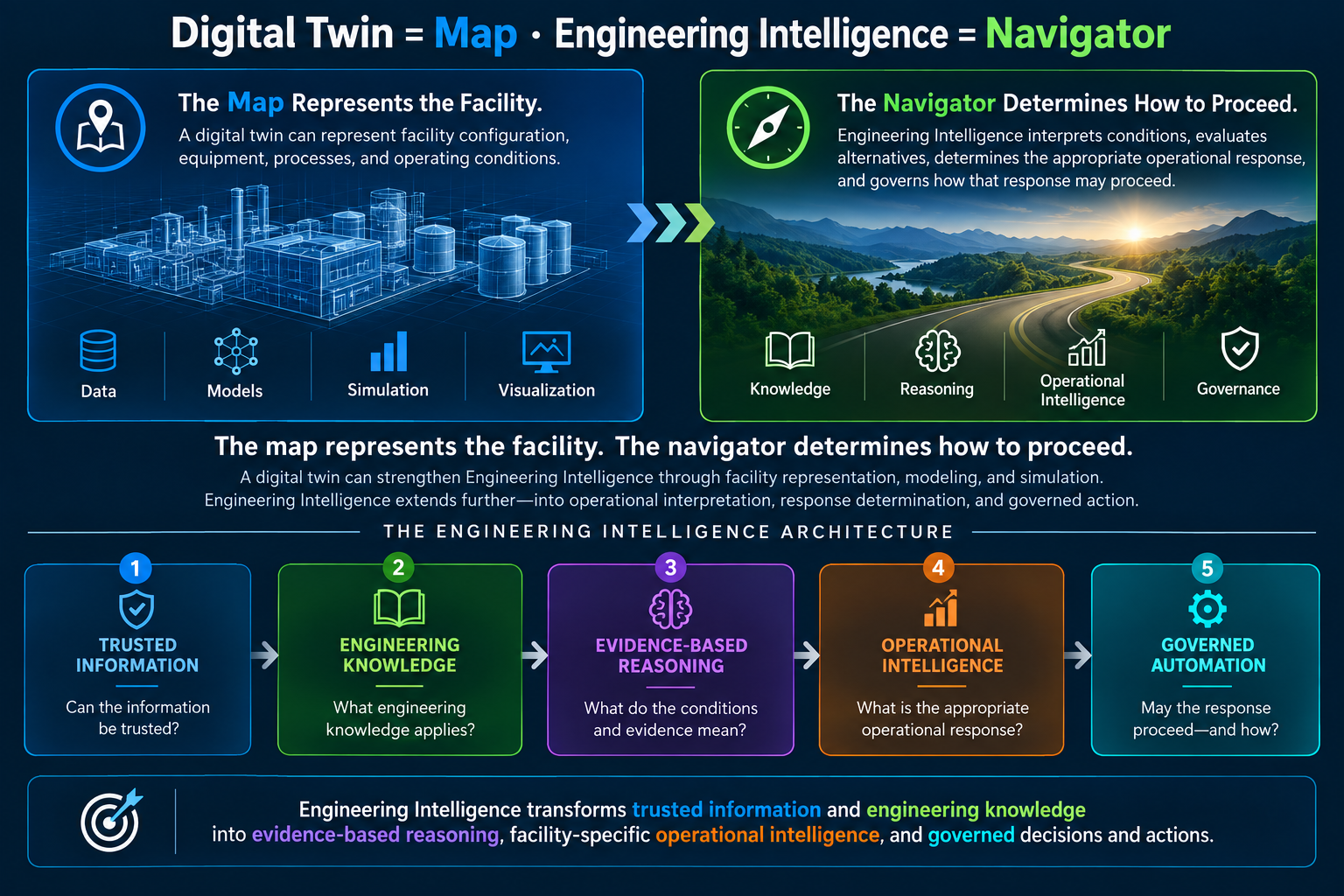
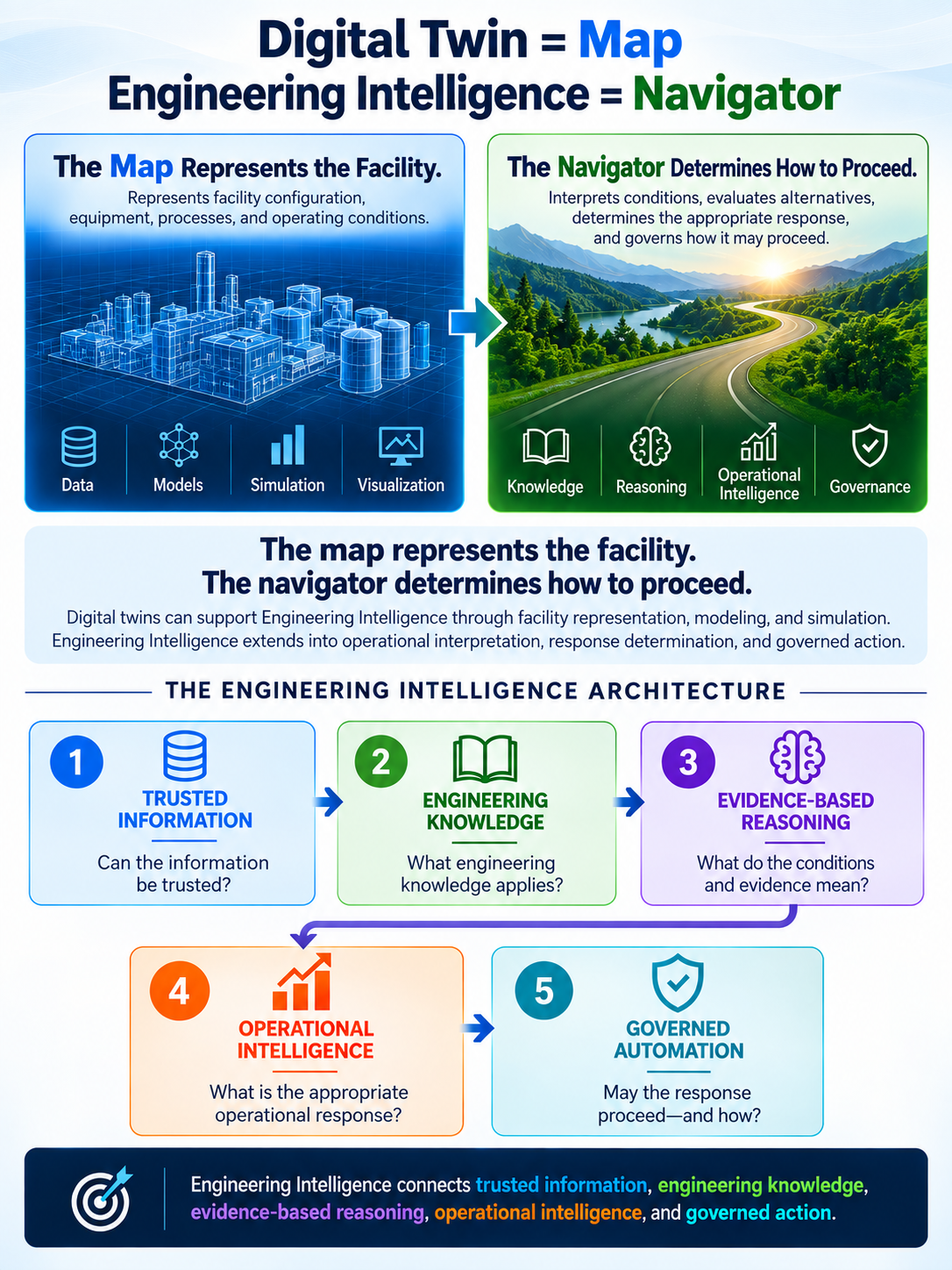
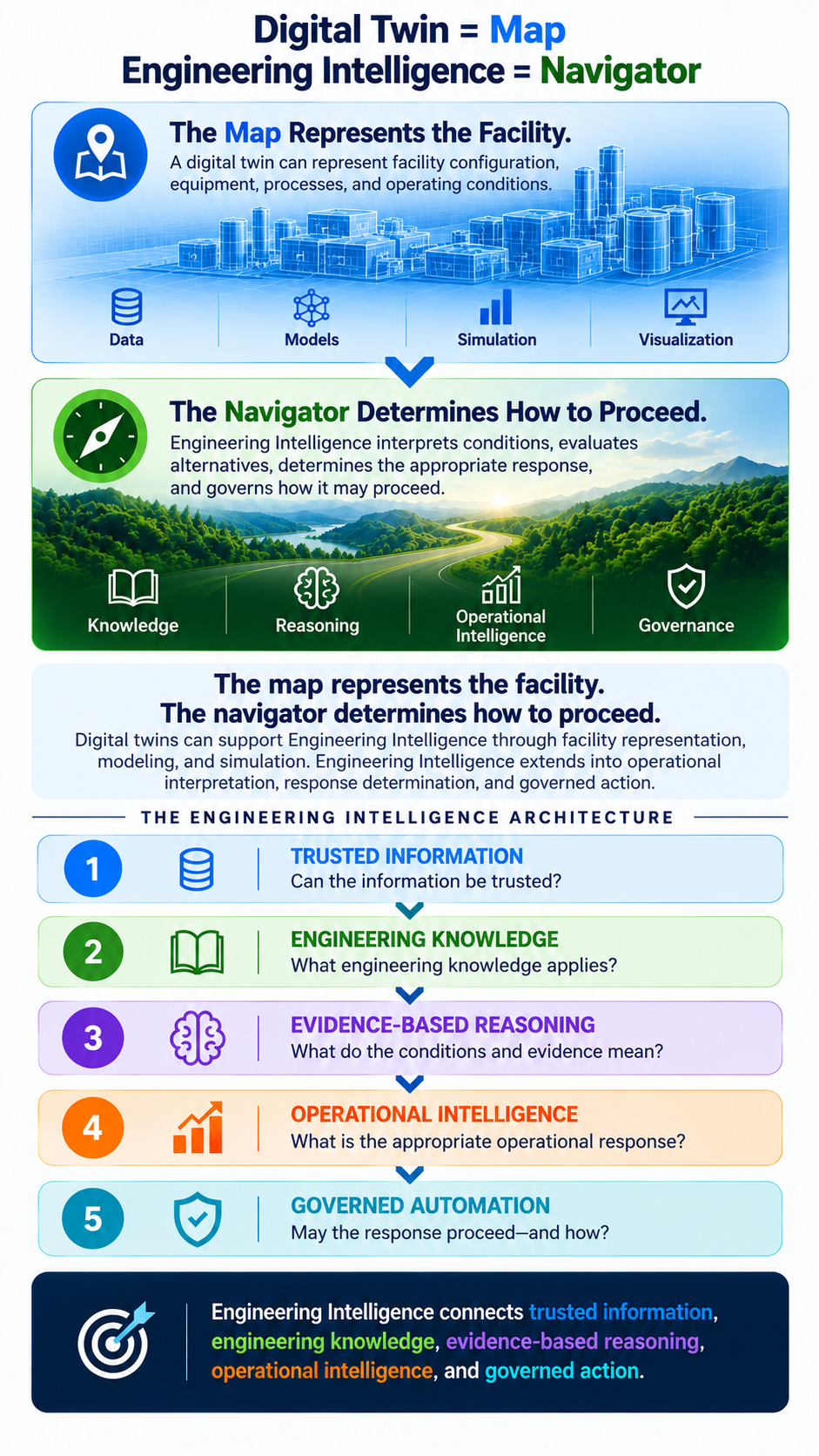

A digital twin can therefore strengthen Engineering Intelligence as a resource for facility representation, modeling, and simulation. Engineering Intelligence provides the broader decision architecture that connects representation and computational analysis to engineering interpretation, operational response, and governed action.
Engineering Intelligence extends beyond representation and simulation. It uses trusted operational information, site-specific engineering knowledge, evidence-based reasoning, facility-specific operational intelligence, engineering constraints, safeguards, and governing authority to determine an appropriate operational response—and whether and how that response may proceed.
The map represents the facility. The navigator determines how to proceed.
A digital twin can therefore strengthen Engineering Intelligence as a resource for modeling and simulation. Engineering Intelligence provides the broader decision architecture that connects representation and computational analysis to engineering interpretation, operational response, and governed action.
How the Engineering Intelligence Platform Provides the Navigator
The four Engineering Intelligence modules work together to transform trusted operational information into evidence-based interpretation, facility-specific operational intelligence, and governed decisions and actions.
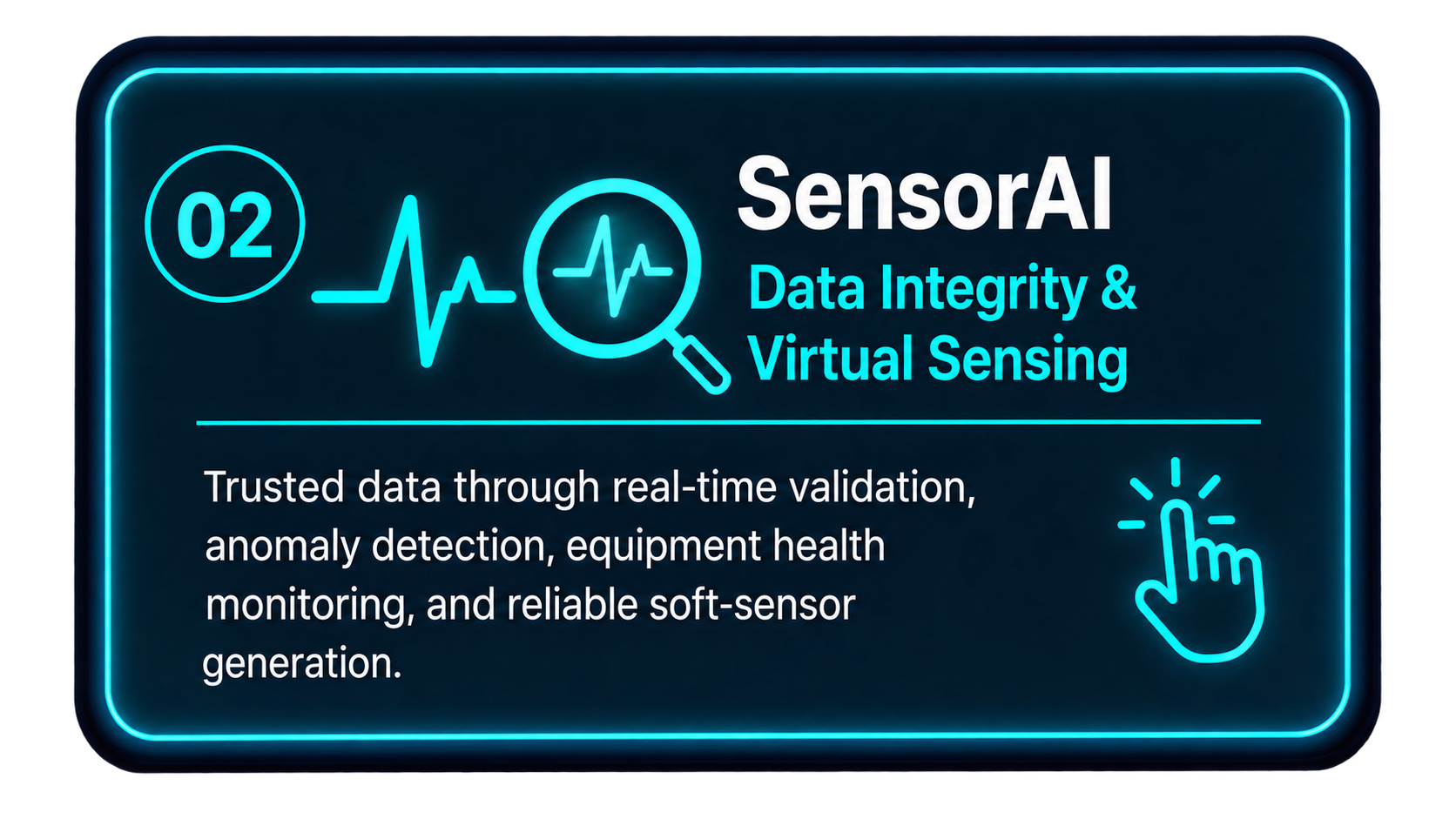
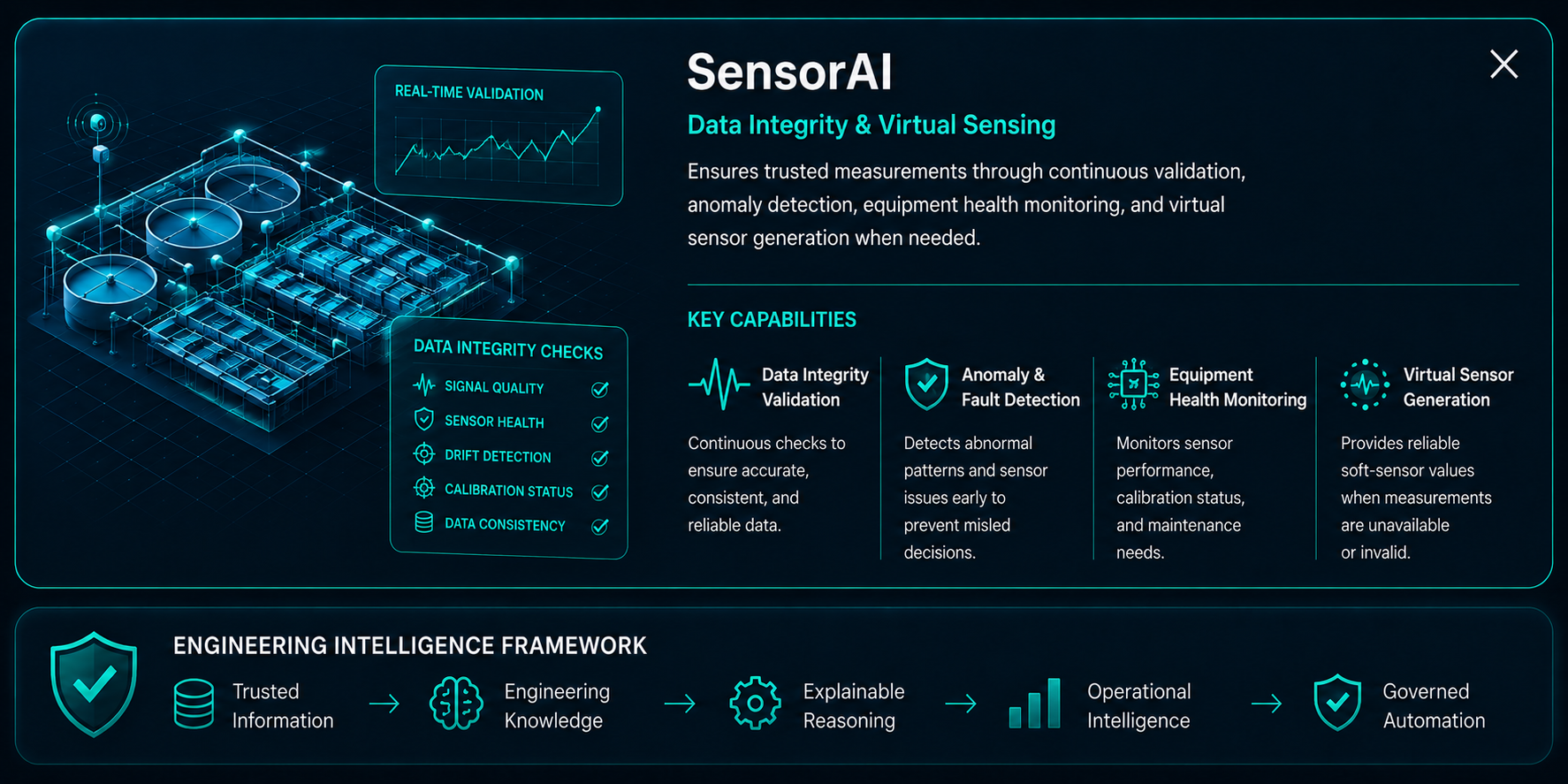
SensorAI™ — Trusted Operational Information
Determines whether measurements and operational information are sufficiently reliable, timely, representative, and appropriate for their intended engineering or operational use.
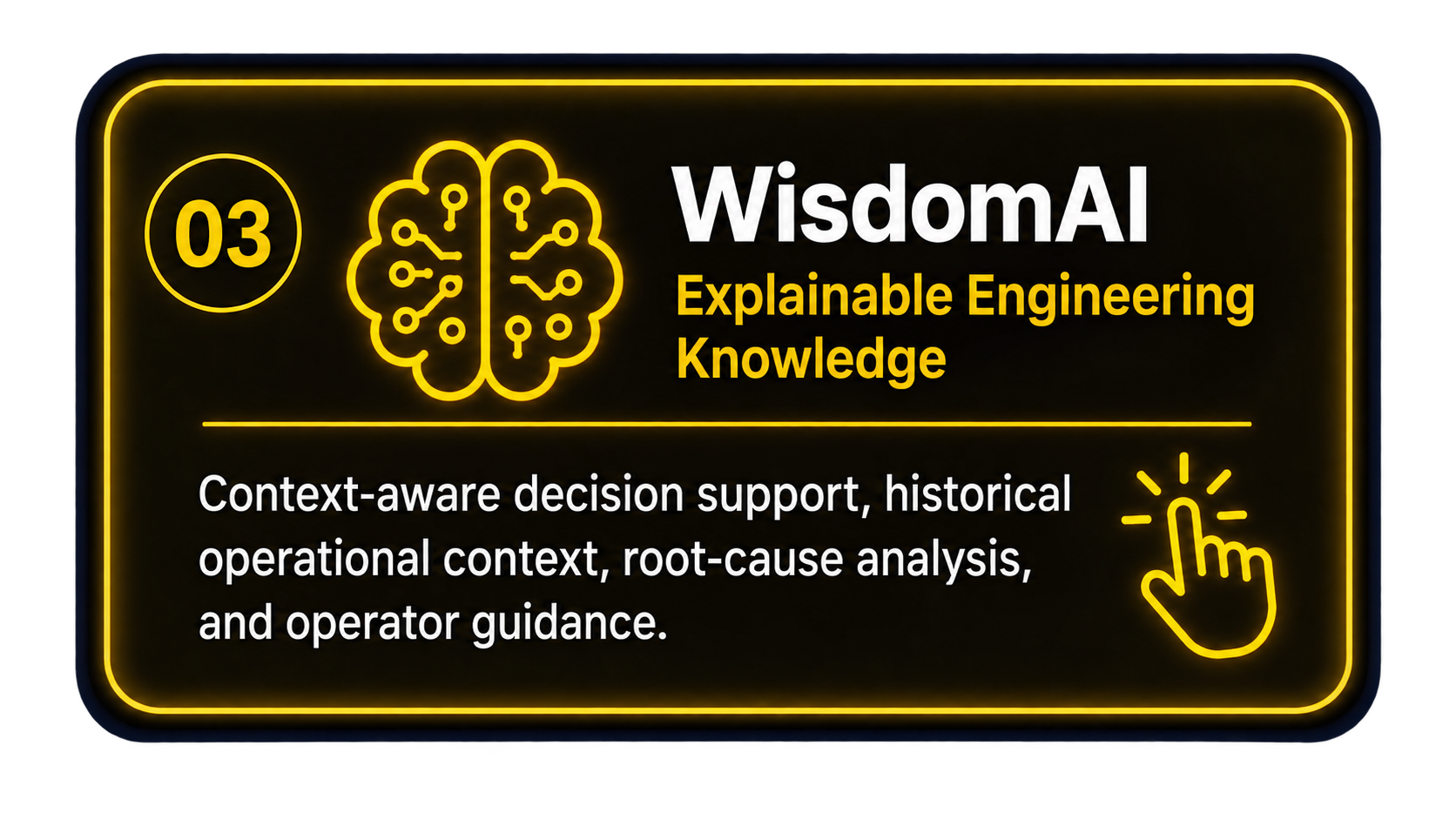
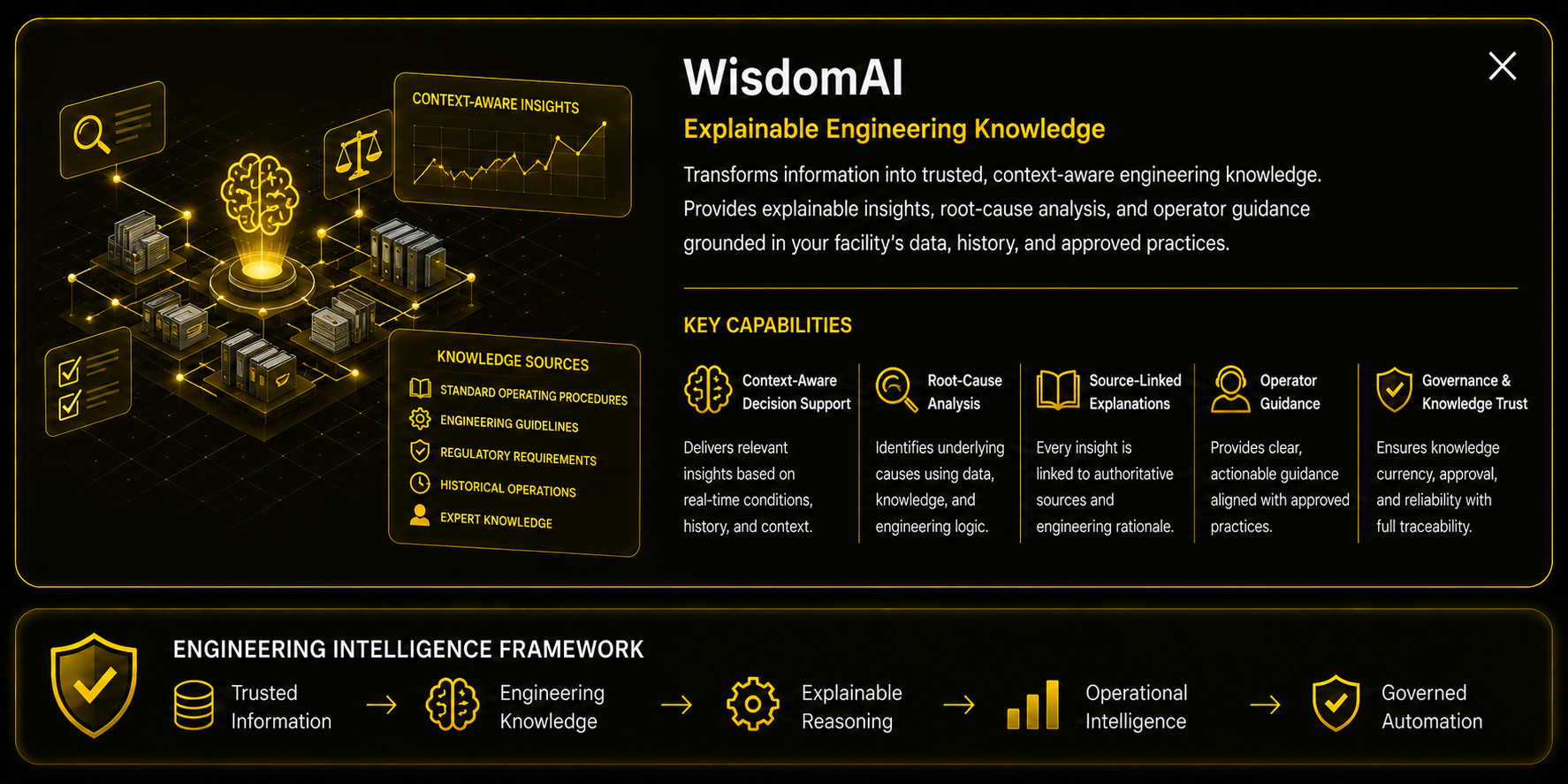
WisdomAI™ — Site-Specific Engineering Knowledge & Evidence-Based Reasoning
Applies site-specific engineering knowledge, approved practices, operating history, applicable requirements, and relevant evidence to interpret conditions, evaluate operational significance, and support evidence-based reasoning.
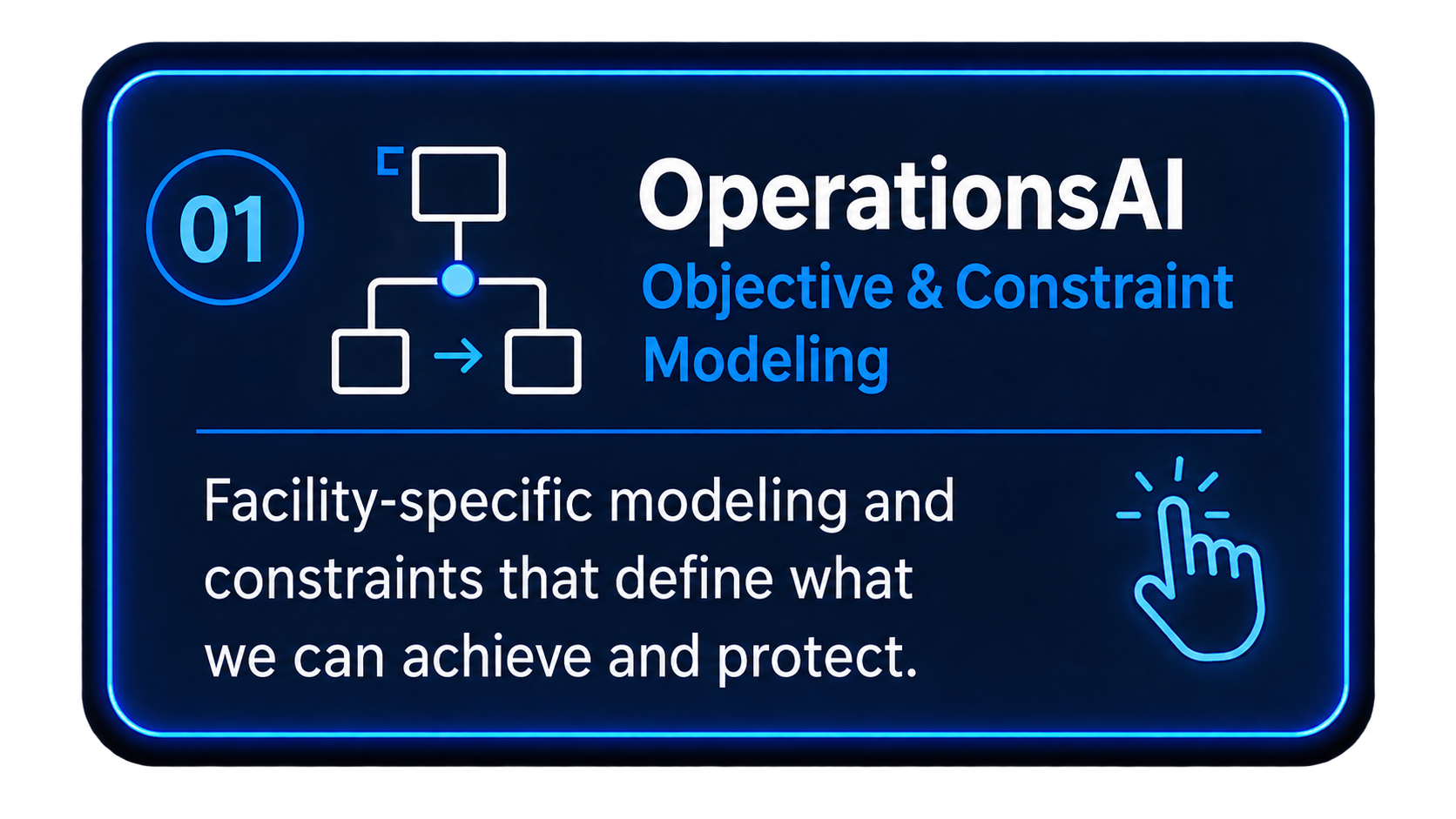
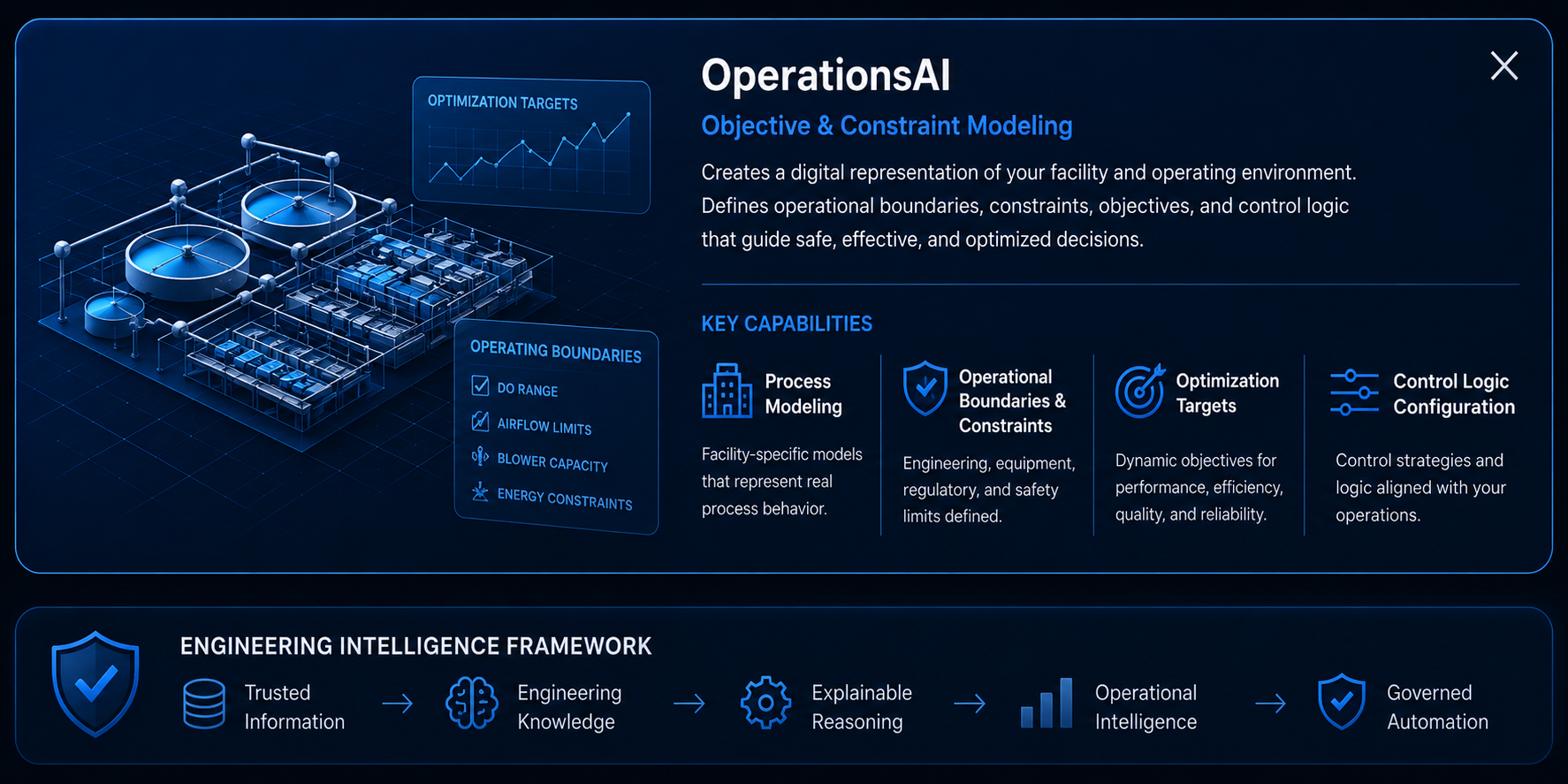
OperationsAI™ — Facility-Specific Operational Intelligence
Uses trusted operational information, facility-specific operational models and methods, operating objectives, process and equipment relationships, and engineering constraints to determine appropriate operational responses under current and anticipated conditions.
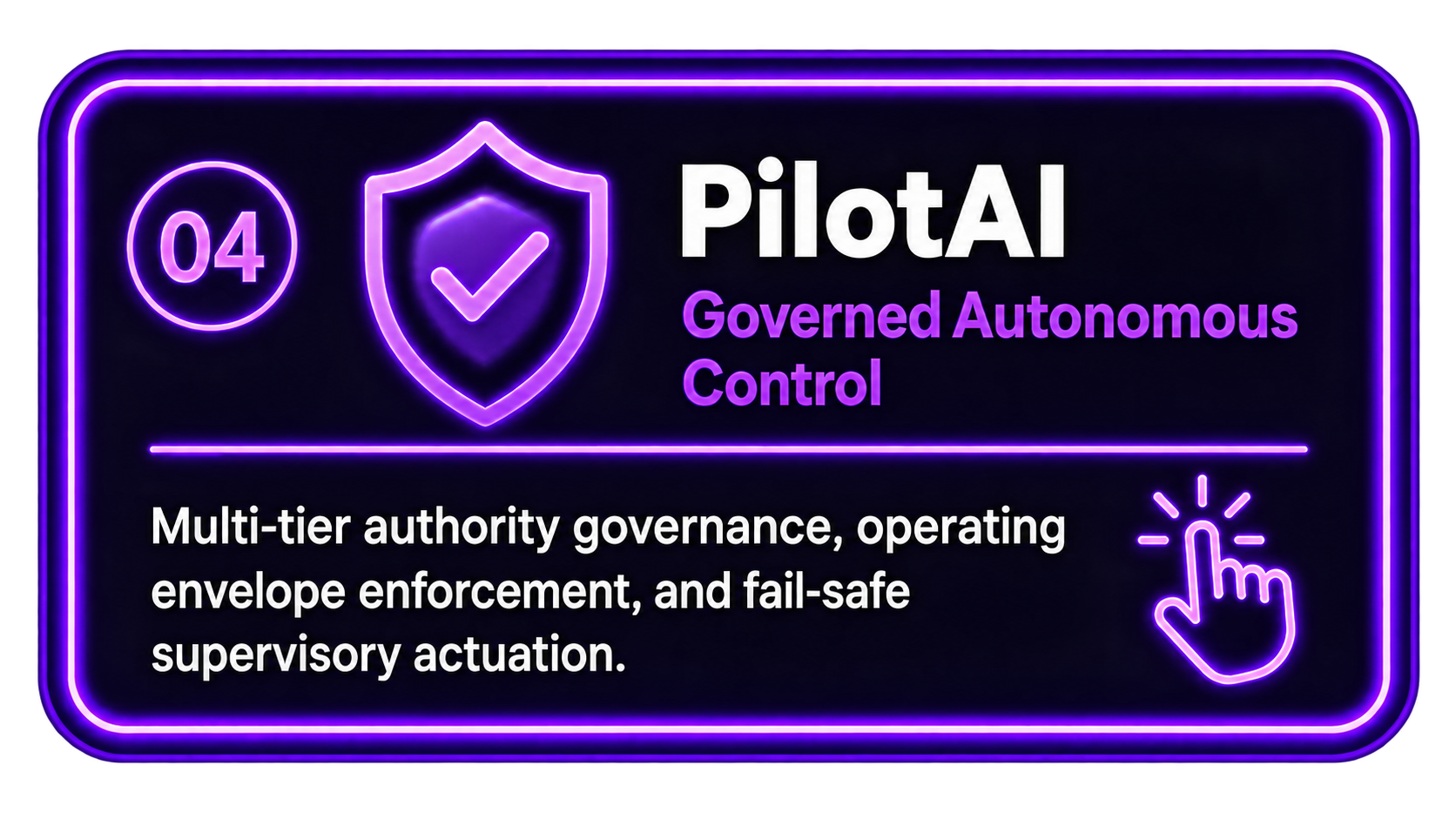
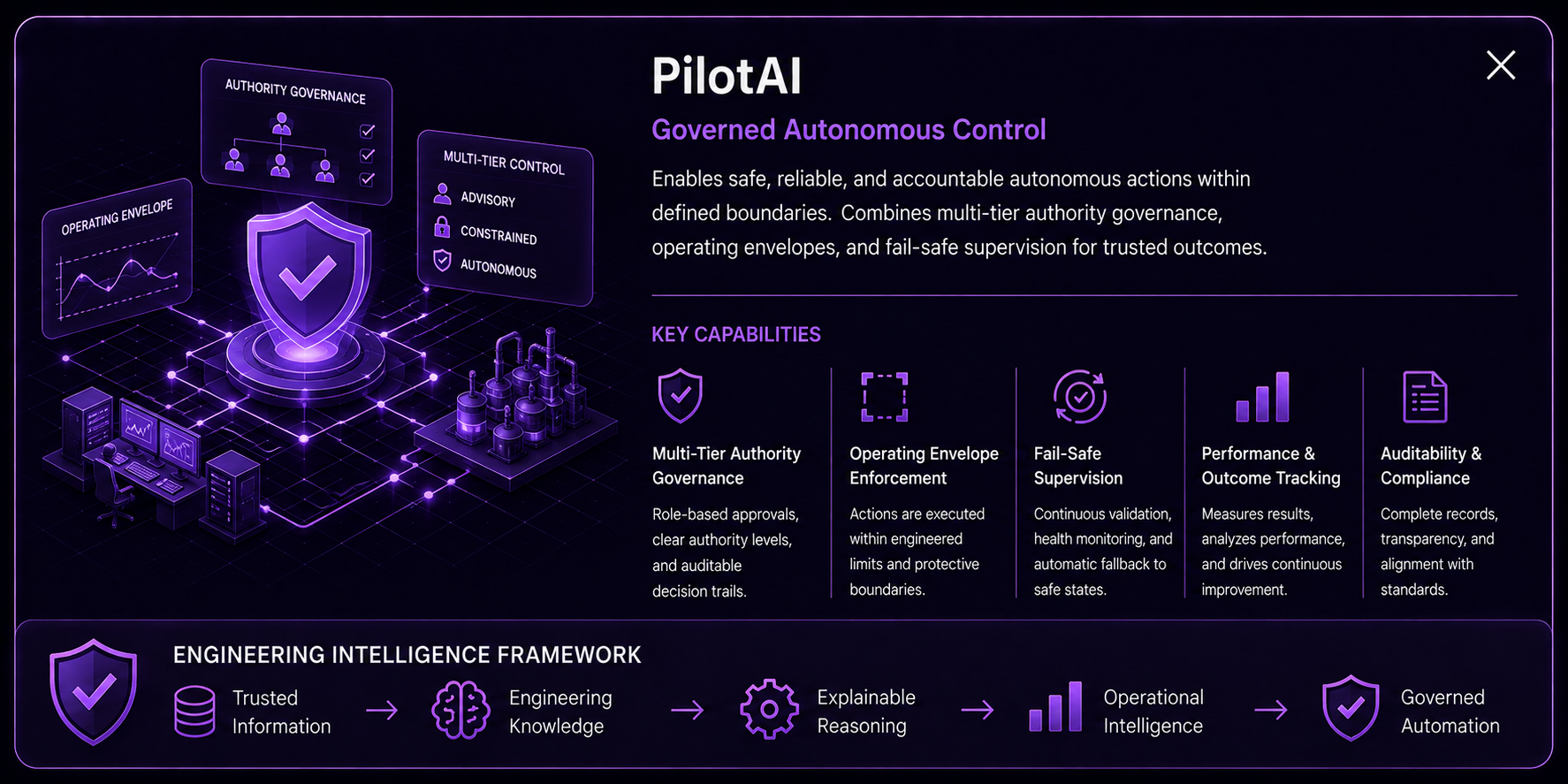
PilotAI™ — Governed Decisions & Actions
Evaluates whether a recommendation or action may be modified, constrained, held, blocked, escalated, authorized, or executed within approved operating boundaries and organizational authority.
Engineering Intelligence Architecture
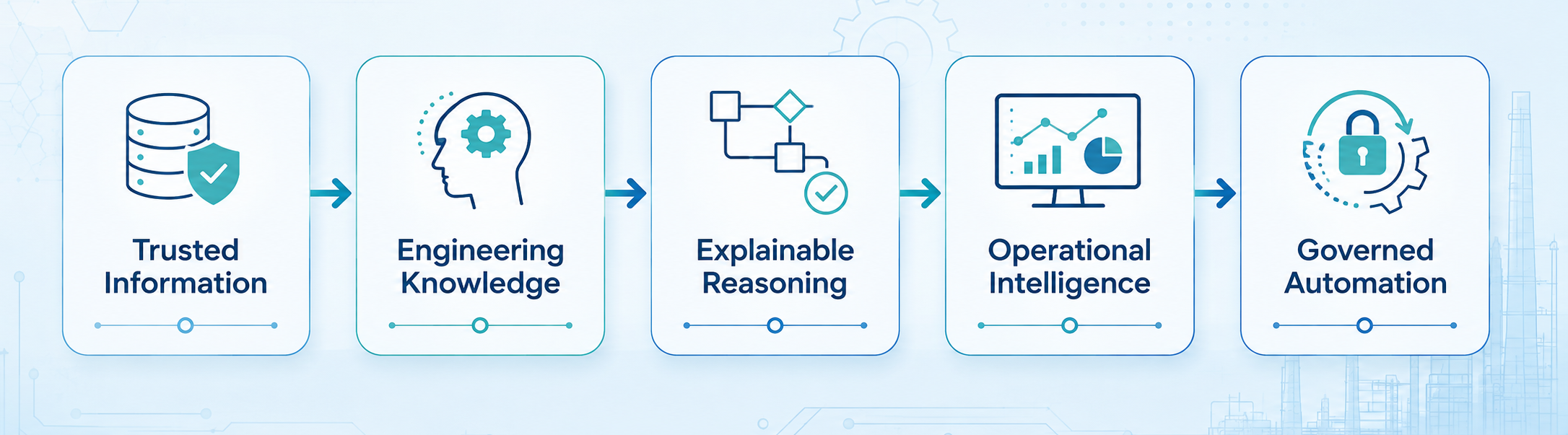
Trusted Information → Engineering Knowledge → Evidence-Based Reasoning → Operational Intelligence → Governed Automation
Runtime Pathway
SensorAI → WisdomAI → OperationsAI → PilotAI
The five-stage architecture describes the decision progression; the four modules describe the software architecture. WisdomAI supports both Engineering Knowledge and Evidence-Based Reasoning.
How the Engineering Intelligence Architecture Works
A structured pathway from trusted operational information to governed action.
Engineering Intelligence progressively transforms facility information into technically supported, operationally relevant, and governed decisions and actions. Each stage provides the foundation required for the next.
Trusted Information
Establish whether operational information is reliable and usable for its intended engineering purpose.
Engineering Knowledge
Bring together applicable engineering principles, standards, procedures, operating experience, technical references, and domain knowledge.
Evidence-Based Reasoning
Interpret conditions, identify emerging and critical issues, evaluate their operational significance and potential consequences, and develop technically supported responses.
Operational Intelligence
Determine how the facility should operate under current and anticipated conditions within defined objectives, process relationships, predictive models, and engineering constraints.
Governed Automation
Translate operational intelligence into authorized, bounded actions while preserving safeguards, operating constraints, organizational authority, and human oversight.
Core Modules of the Engineering Intelligence Platform
Four coordinated technologies implement the Engineering Intelligence architecture.
McC AI Group’s proprietary, patent-pending Engineering Intelligence Platform addresses distinct but connected parts of the engineering decision pathway—from determining whether operational information can be trusted to determining how the facility should operate and whether a proposed action is authorized.
SensorAI — Trusted Operational Information
Determines whether sensor and process information can be trusted for its intended engineering use, including signal validation, confidence assessment, sensor-integrity evaluation, and appropriate use of virtual or inferred information.
WisdomAI — Site-Specific Engineering Knowledge & Evidence-Based Reasoning
Connects applicable engineering knowledge with facility-specific equipment, configuration, operating history, procedures, standards, constraints, and validated expertise. It interprets conditions, identifies emerging and critical issues early, evaluates their operational significance and potential consequences, and develops appropriate responses and corrective measures for consideration.
OperationsAI — Facility-Specific Operational Intelligence
Combines trusted information, site-specific engineering knowledge, and evidence-based reasoning with operating objectives, process and equipment relationships, predictive models, optimization strategies, constraints, and control logic to determine how the facility should operate.
PilotAI — Governed Decisions & Actions
Evaluates proposed decisions and actions against information confidence, engineering constraints, safety and equipment protections, operating boundaries, and organizational authority to recommend, constrain, hold, block, authorize, or execute actions as permitted.
Runtime pathway: SensorAI → WisdomAI → OperationsAI → PilotAI
The five-stage architecture describes the decision progression; the four modules describe the software architecture. WisdomAI supports both Engineering Knowledge and Evidence-Based Reasoning.
Advantages and Benefits of McC AI Group’s Engineering Intelligence
Engineering Intelligence is designed to improve operational performance by combining trusted information, site-specific engineering knowledge, evidence-based reasoning, facility-specific operational intelligence, and governed decision-making. Its value depends on the facility, application, available information, engineering context, and authorized level of operational use.
- Optimize Energy and Process Performance
- Reduce Operational Errors and Improve Decision Consistency
- Identify Risk Earlier and Help Prevent Incidents
- Preserve Facility-Specific Knowledge and Operational Continuity
- Support Regulatory Compliance and Performance
- Reduce O&M Costs and Operational Burden
- Deliver Facility-Specific and Spatially Aware Engineering Intelligence
See each Engineering Intelligence module for additional details and module-specific benefits.
Benefits and performance are facility- and application-specific and should be established through appropriate evaluation and documented validation. Engineering Intelligence operates within defined engineering constraints, safeguards, information-quality requirements, facility governance, and authorized operational boundaries.
What creates the benefits → Benefits → Detailed-information link → Qualification and constraints.
From Platform Technology to Facility-Specific Applications
The Engineering Intelligence Platform is not limited to one industry, process, or facility type.
Its core technologies are configured according to each facility’s operational objectives, information environment, engineering constraints, risk profile, and authorized level of control.
Applications may address process optimization, sensor and equipment reliability, engineering knowledge preservation, operational decision support, safety, maintenance, and governed automation.
Wastewater Treatment Applications
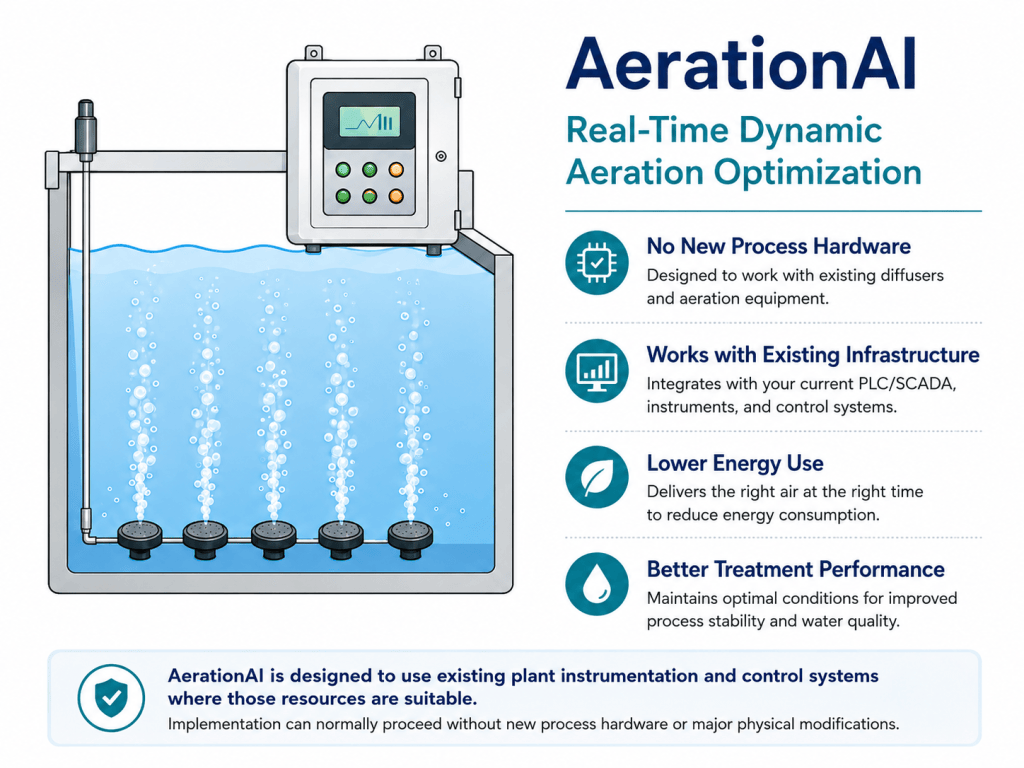
AerationAI™: Predictive Aeration Optimization for Reliable, Energy-Efficient Treatment
AerationAI applies facility-specific predictive and engineering relationships to determine aeration requirements as wastewater loading, biological conditions, equipment operation, and process response change.
Trusted operational information, engineering constraints, and governed decision logic support reliable treatment while reducing unnecessary aeration and improving energy efficiency.
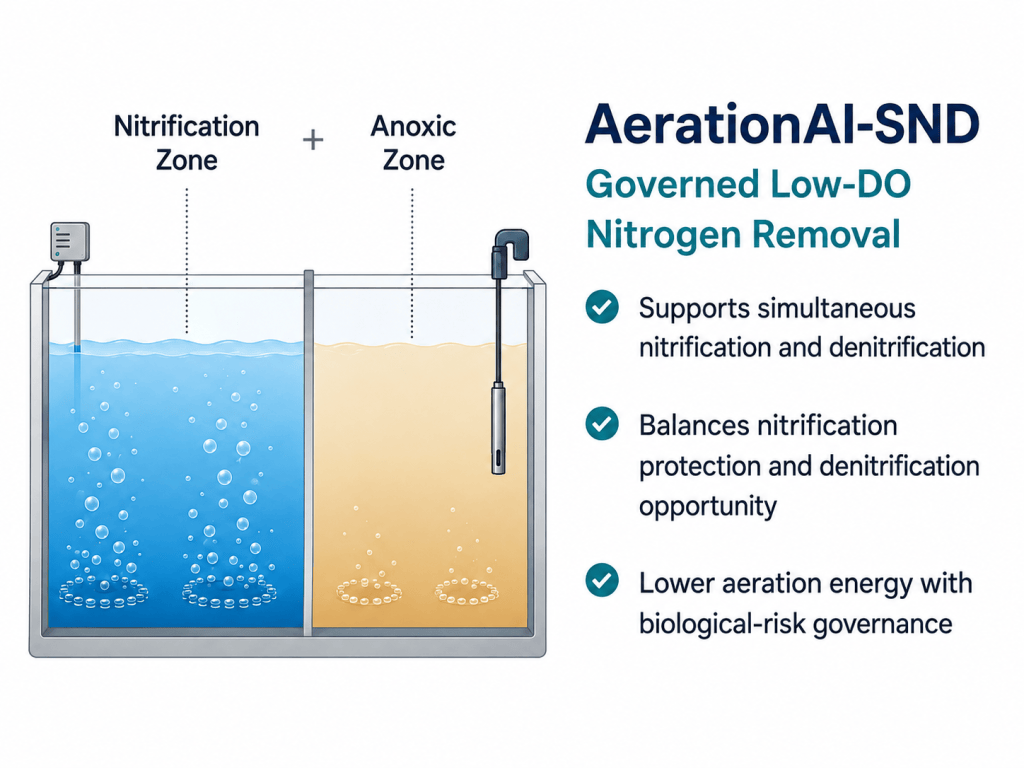
AerationAI-SND™: Governed Low-DO Operation for Simultaneous Nitrification and Denitrification
AerationAI-SND extends predictive aeration optimization to the narrower biological operating conditions required for simultaneous nitrification and denitrification.
Trusted information, biological safeguards, operating envelopes, process-response assessment, and governed decision logic support low-DO operation within defined biological and engineering boundaries..
Proprietary Technologies Built for Real Operations
Proprietary and patent-pending technologies support trusted information, engineering knowledge, predictive optimization, operational intelligence, and governed decision-making.
McC AI Group develops these technologies as coordinated Engineering Intelligence capabilities rather than isolated AI tools. Together, they evaluate computational outputs within engineering context, facility-specific conditions, constraints, safeguards, and authorized operating boundaries before those outputs become operational decisions or actions.
Designed to Work With Existing Plant Infrastructure
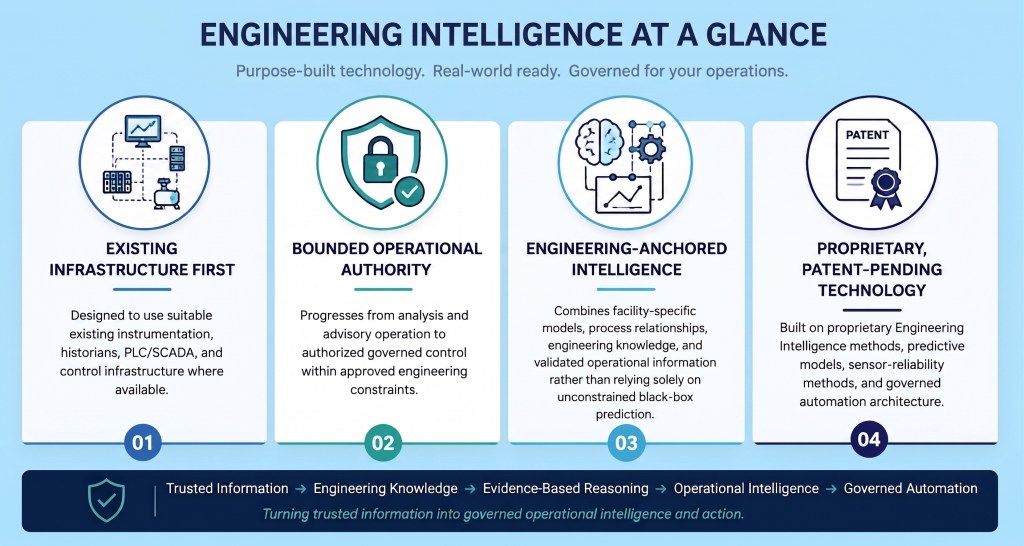
Engineering Intelligence is designed to operate with existing instrumentation, PLC/SCADA systems, historians, control equipment, engineering procedures, and organizational authority.
When suitable instrumentation, information quality, connectivity, and control interfaces already exist, implementation can normally proceed without new process hardware or major physical modifications.
We begin with what the facility already has, determine what can be trusted and used, and identify only the material gaps required for the intended application.
Existing PLC interlocks, equipment protections, cybersecurity controls, fallback provisions, and operator override remain in place.
Performance Validation Before Expanding Authority
Engineering Intelligence technologies can be introduced progressively so that facilities can evaluate performance, integration, and operational value before granting greater authority.
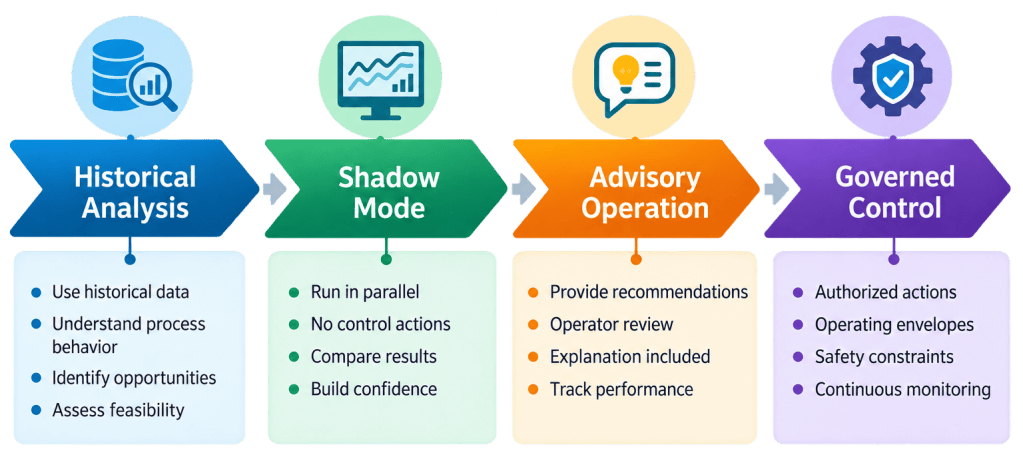
Historical Analysis — Evaluate Data & Opportunity
Evaluate information quality, establish operating baselines and relationships, identify constraints, and assess opportunity.
Shadow Mode — Validate in Parallel
Run alongside existing operations without changing plant control and compare predictions, interpretations, and recommendations with actual performance.
Advisory Operation — Recommend With Operator Review
Provide recommendations for facility review while operators retain decision authority.
Governed Control — Authorized Bounded Actions
Permit explicitly authorized actions within defined engineering, equipment, cybersecurity, operational, and organizational boundaries.
Performance Before Authority
Performance and operational authority are established progressively using facility-specific information, prospective validation, engineering review, and facility approval.
Progression is based on demonstrated information confidence, engineering validation, operational performance, organizational readiness, and explicit site authorization—not simply elapsed time. Existing control protections, cybersecurity requirements, operator authority, and facility governance remain integral throughout deployment.
Facilities can obtain value without proceeding to Governed Control.
Potential Industries for Engineering Intelligence
McC AI Group develops Engineering Intelligence for regulated, safety-sensitive, energy-intensive, and mission-critical facilities where operational decisions require engineering judgment and accountable authority.
- Water & Wastewater
- Energy & Utilities
- Oil, Gas & Petrochemicals
- Chemical & Process Industries
- Manufacturing
- Transportation
- Environmental Infrastructure
- Other Regulated and Mission-Critical Facilities
Applicability depends on the operational problem, available information, facility-specific engineering context, constraints, integration environment, and appropriate level of decision authority.
Where decisions affect safety, compliance, reliability, energy, equipment, or public infrastructure, trusted engineering intelligence matters.

About McC AI Group, Inc.
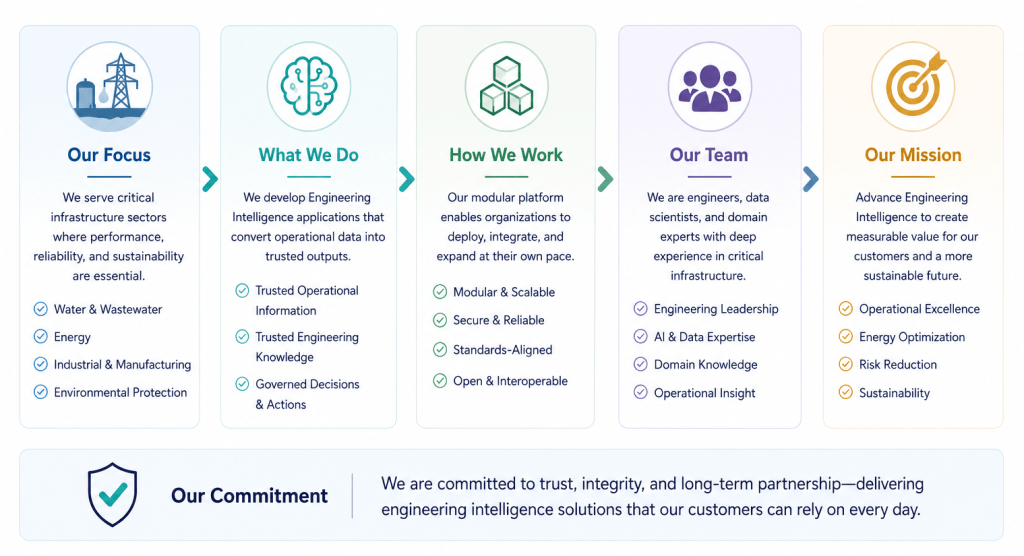
McC AI Group is a U.S.-based independent engineering research and technology company pioneering Engineering Intelligence for critical infrastructure, with a strong international network of engineering, research, and industry expertise.
Our engineering-first approach integrates advanced computational methods with engineering principles, trusted operational information, site-specific engineering knowledge, evidence-based reasoning, operational intelligence, and governed decision-making.
Technology is applied to the operational problem—not the operational problem forced into a generic AI solution.
Engineering Intelligence for Your Facility
Evaluate how Engineering Intelligence could address your facility’s specific operational challenges.
A technical evaluation can begin with existing operational information, instrumentation, control infrastructure, engineering constraints, and priority challenges to determine where Engineering Intelligence can provide practical value and what level of validation and deployment is appropriate.
Understand the facility. Identify the opportunity. Validate the technology. Expand authority only when ready.
 McC AI Group, Inc.